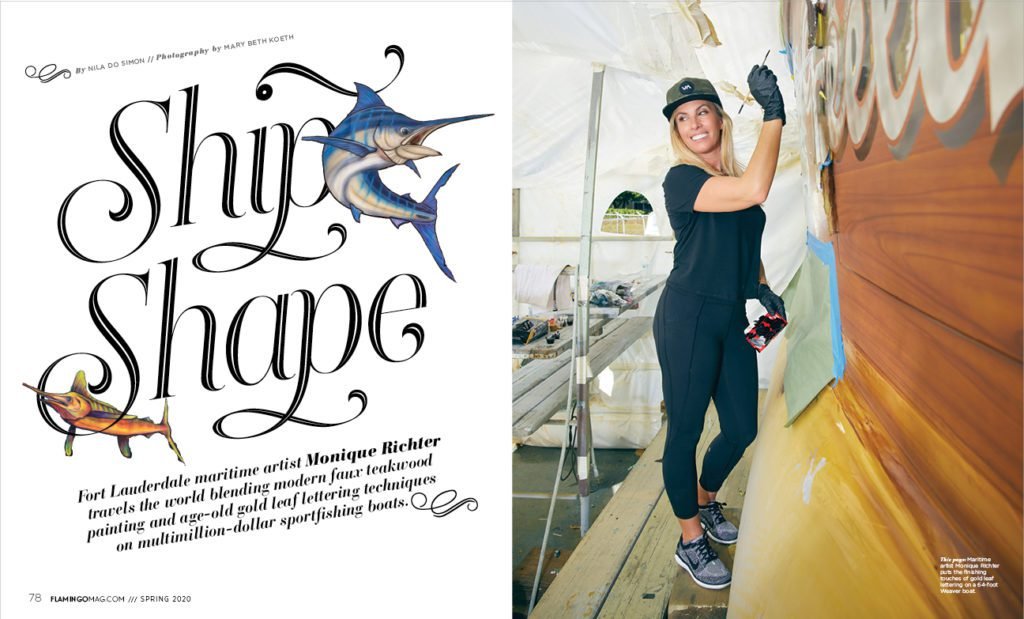
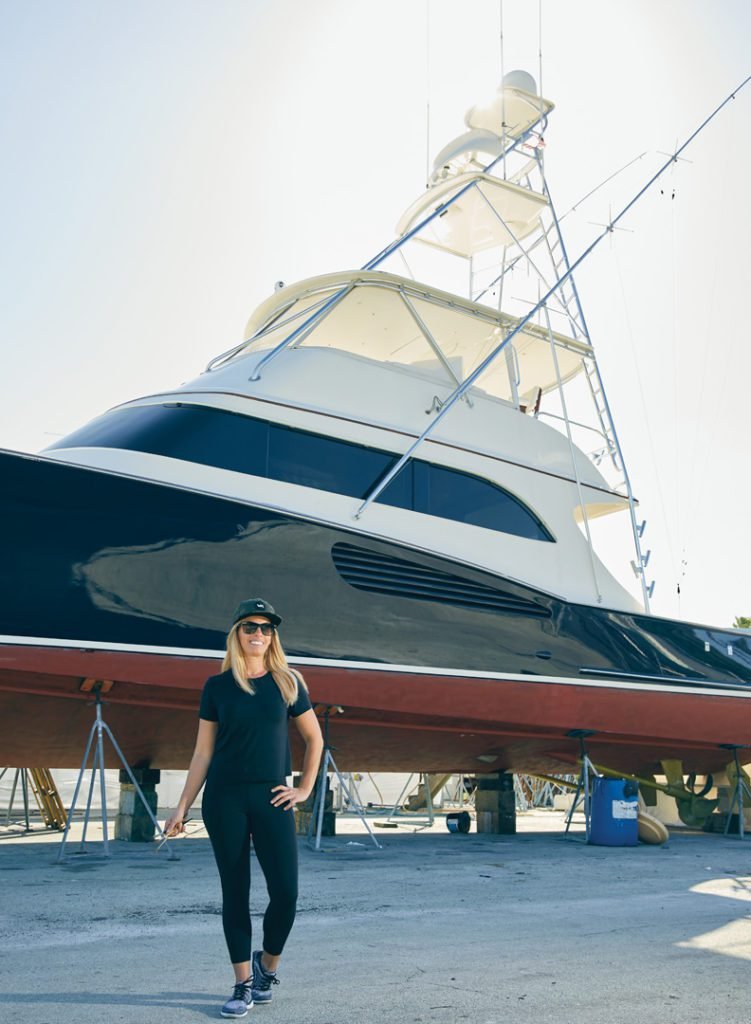
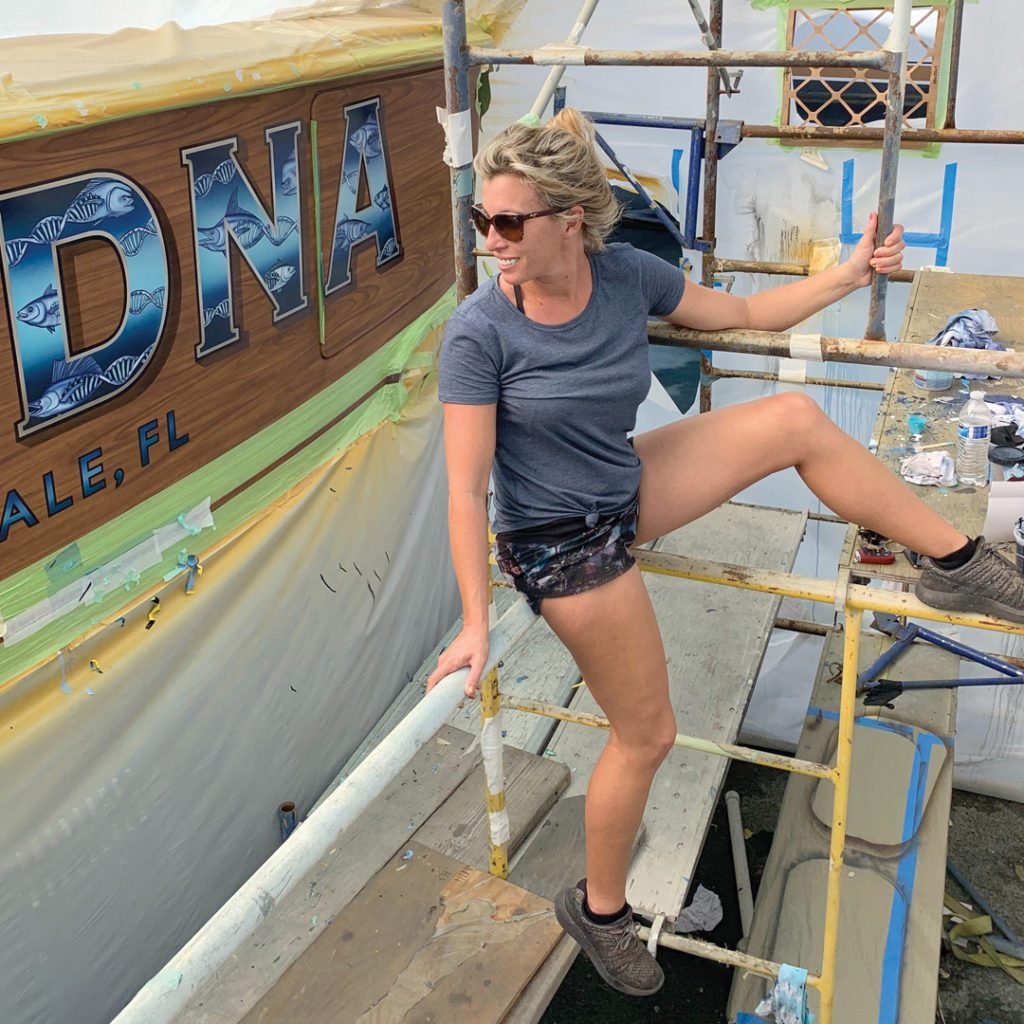
Monique Richter is in total concentration mode. She stands atop a 6-foot scaffold behind the stern of a 64-foot Spencer Yacht named Cabana, paintbrush in one hand, a rectangular palette in the other and the noonday sun glowing high above her right shoulder. A soft offshore wind rustles through the blonde hair peeking out from under a baseball cap. She outlines the final “a” in the boat’s name with a fine detail brush and absolute precision, a task she makes look routine.
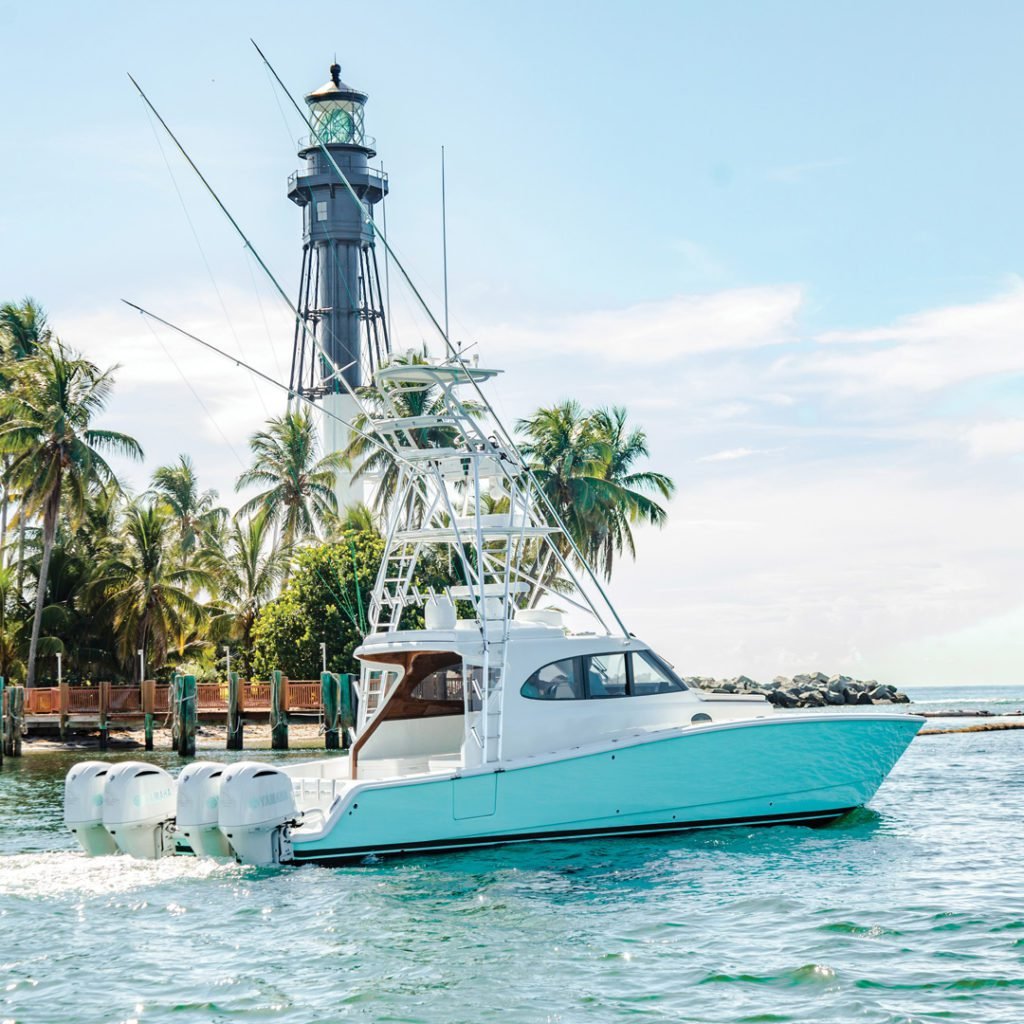
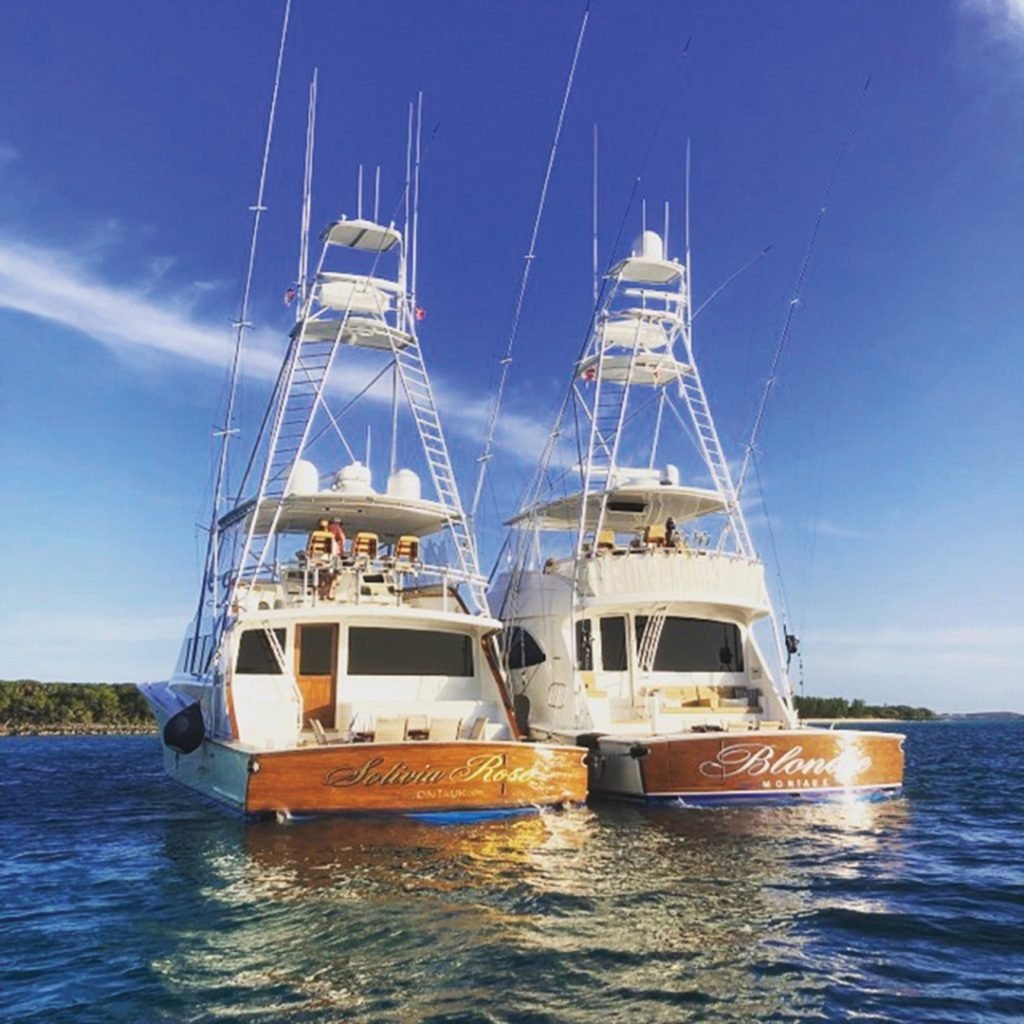
Today at Seminole Marine boatyard in Palm Beach Gardens, the setting looks similar to the 150-some job sites she’s worked on over the past 10 months, a sea of multimillion-dollar sportfishing boats and yachts from Merritts to Ryboviches to Vikings. For the past three years, more often than not Richter could be found at boatyards across the globe painting boat names, prized marlins and other adornments on hulls, transoms, bows, sterns and any other boat part that an owner desires. That’s because Richter has earned a reputation as one of the world’s most in-demand boat artists, painting 675 boats over these three years for some of the world’s most discerning clients, including Johnny Depp, Jimmy Buffett and Alan Jackson. With a sun-kissed tan, wavy blonde hair and an alluring, personable disposition, Richter could be mistaken for a modern-day mermaid. But make no mistake—Richter is a unicorn in this field. Where other industry artists might paint a few dozen vessels in a year, Richter, by contrast, estimates that she paints between 200 to 300 boats, working for 54
boatbuilders worldwide.
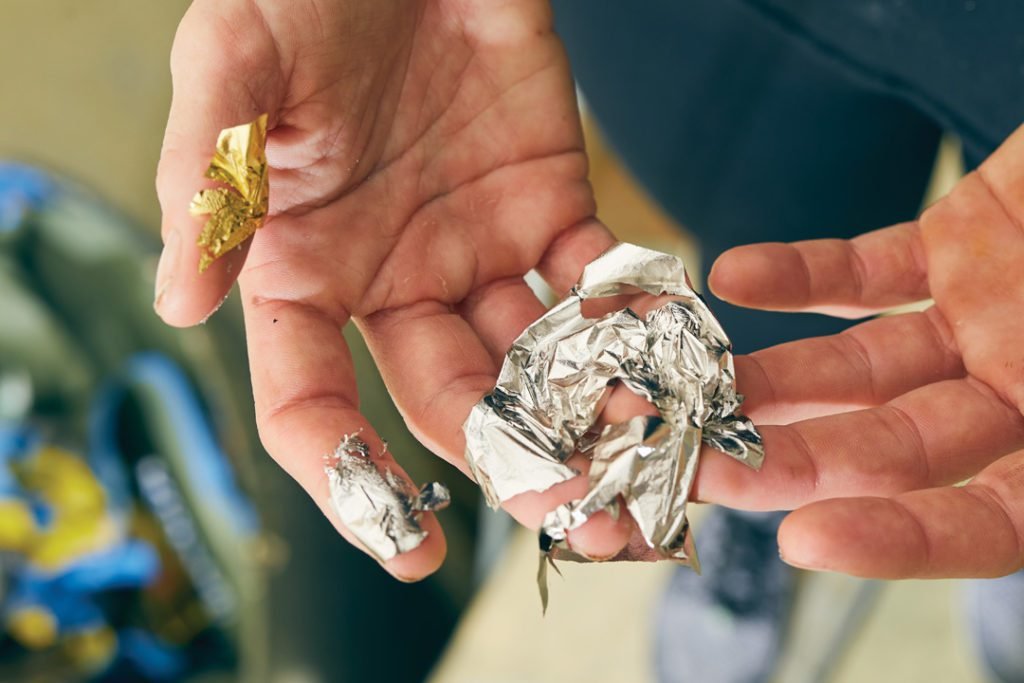
Richter has made a name for herself not just through the sheer quantity of boats she’s painted, but also through the types of media she specializes in: faux teakwood painting and gold and platinum leaf lettering. Together, they are a dichotomy of eras; the former is a newer art form, whereas the latter is an ancient craft that dates back to Egypt. To Richter, it all falls under the umbrella of art, which, she says, “is a second language to me.”
Dressed in a racerback tank top that reveals a constellation of platinum leaf specks on her back right shoulder that match the ones dotting her hands and fingernails, Richter is nearing the end of this job, which entails lettering the boat’s name in platinum. When she’s done, she will head to Costa Rica to paint for a client who’s commissioned her for yet another one of his vessels.
She’s a workhorse who’s on the job seven days a week, sometimes in Dubai or Australia, the Netherlands, Puerto Rico, Mexico or the Eastern Seaboard. When asked why she works so much, Richter smiles, shrugs and simply says, “That’s just how I am.”
THE REEL DEAL
It was a broken pinky toe that led Richter to become a premier gold leaf and faux teak artist. Born to a botanist mother and an electrical engineer father who was part of the Apollo missions, she grew up in Fort Lauderdale, immersed in an outdoor culture that included water sports and boating. As a high schooler, she would skip classes to go wakeboarding. Once, while sneaking off the American Heritage School’s campus, her shirt got caught at the top of the fence she was trying to hop, and she was forced to rip it to get loose.
There was something about the open water that kept calling to her. As Richter says, “When I see water, I see an adventure.”
At age 16, she became a professional wakeboarder, successfully competing around the world for seven years and winning second place in the 2006 national championships in the open women’s division. Then, one Friday night in 2013 while enjoying a night out with friends in downtown Fort Lauderdale, someone stepped on Richter’s toe. It broke, and that took her off the tour, unable to balance without 10 healthy toes.
After ending her wakeboarding career, Richter still never left the water by joining the crew of a yacht. She became a captain, part of a growing group of female skippers around the world, running a marlin boat out of St. Thomas. While in the Bahamas, Richter remembers seeing a boat painted like real teak.
For some classically minded owners, Merritt has to sell them on the legitimacy of faux wood finishing. “I get it,” he says. “It’s like if you want a Steinway piano, then would you buy a fake Steinway? But it’s not really like that with faux teak painting.”
Merritt counts its advantages, which include requiring less maintenance than real teak; natural wood needs to be sanded and revarnished multiple times per year, rather than once every eight years for faux teak.
When the craze was catching on, Merritt remembers a fresh-faced Richter asking him in 2017 if she could do some faux teak painting on one of his boats.
“She walked in one day with a board that featured some of her work and a desire to do faux painting,” he says. “I looked at it and said that her colors were good, but not her graining.”
But something about Richter’s eagerness impressed Merritt. He gave her a test: painting a yacht door. She aced it. He then proposed a bigger project: a $16 million, 72-foot Merritt.
“He said, ‘That’s your new canvas,’” Richter recalls.
“I remember looking at the boat once I finished painting it and couldn’t believe what I produced. Roy gave me a shot, and I’m now famous for my painting because of him.”
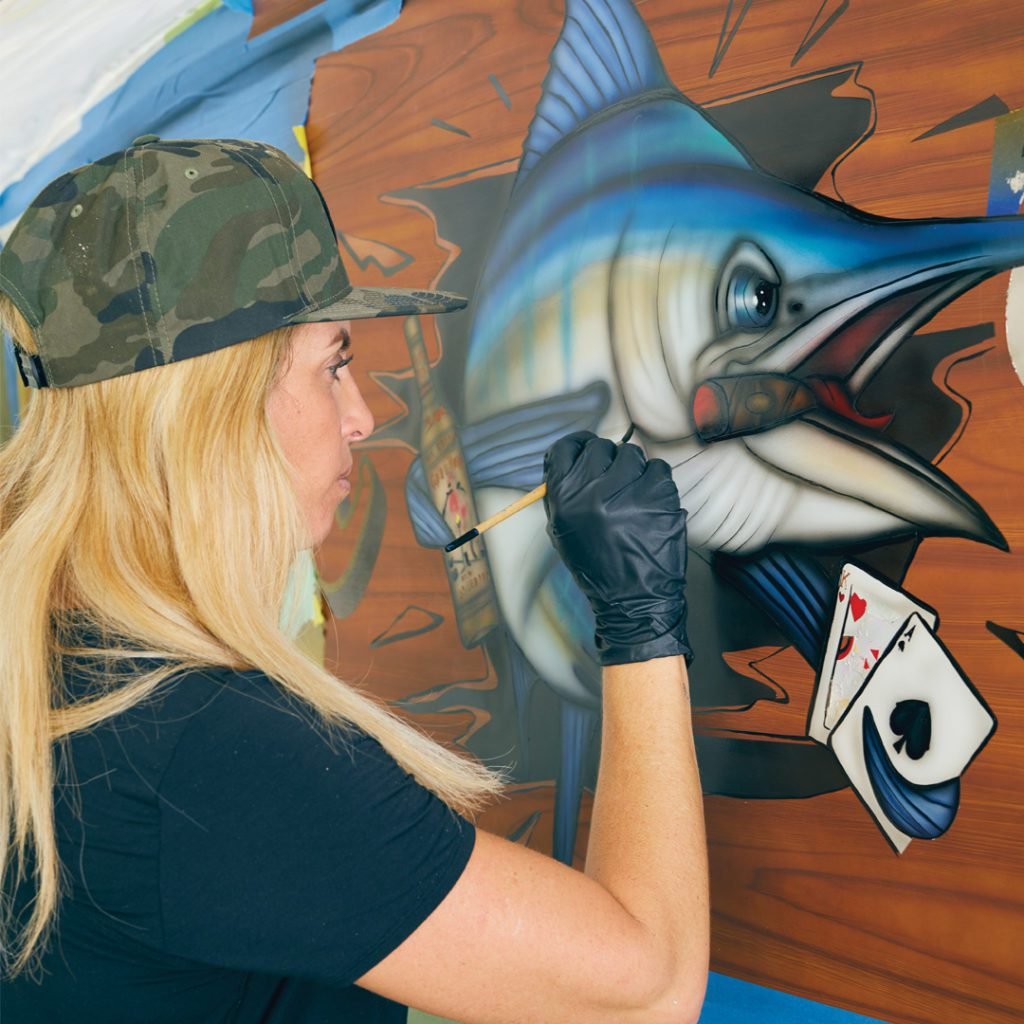
Within three years, she created a name for herself in the market. She became so synonymous with her craft that clients have taken to calling her “Faux-nique.” Richter’s work is always done freehand with Awlgrip marine paint, creating a durable finish. The painted wood graining is so precise that it has fooled many an eye into thinking the boat is manufactured out of natural teak.
“She’s an artist. That’s what makes her work different and special,” Merritt says of Richter. “She’s not just a sign painter, which can be pretty mechanical. She has an eye for aesthetics.”